




.jpeg)
On summer mornings in Celeryville, Ohio, the fields look almost black. The soil—fine, rich, and deep—is what locals call the muck. It is soft, fertile land Dutch immigrants drained by hand more than a century ago to grow vegetables for nearby cities. It’s in this soil that Holthouse Farms started in 1903, when a young Dutch family settled along the quiet ditch lines.
Four generations later, the landscape has changed, the economy has shifted, and the work has grown more complex. But the Holthouse family is still here—farming, packing, adapting, and rooted in the same small community built from swamp, faith, and grit.
“We’ve been born and raised in the vegetable business,” says co-owner Ken Holthouse, one of four cousins who own and operate the business today. “There’s been a lot of evolution over the last 20 years in labor, food safety, everything. You find ways to adapt or you don’t make it.”
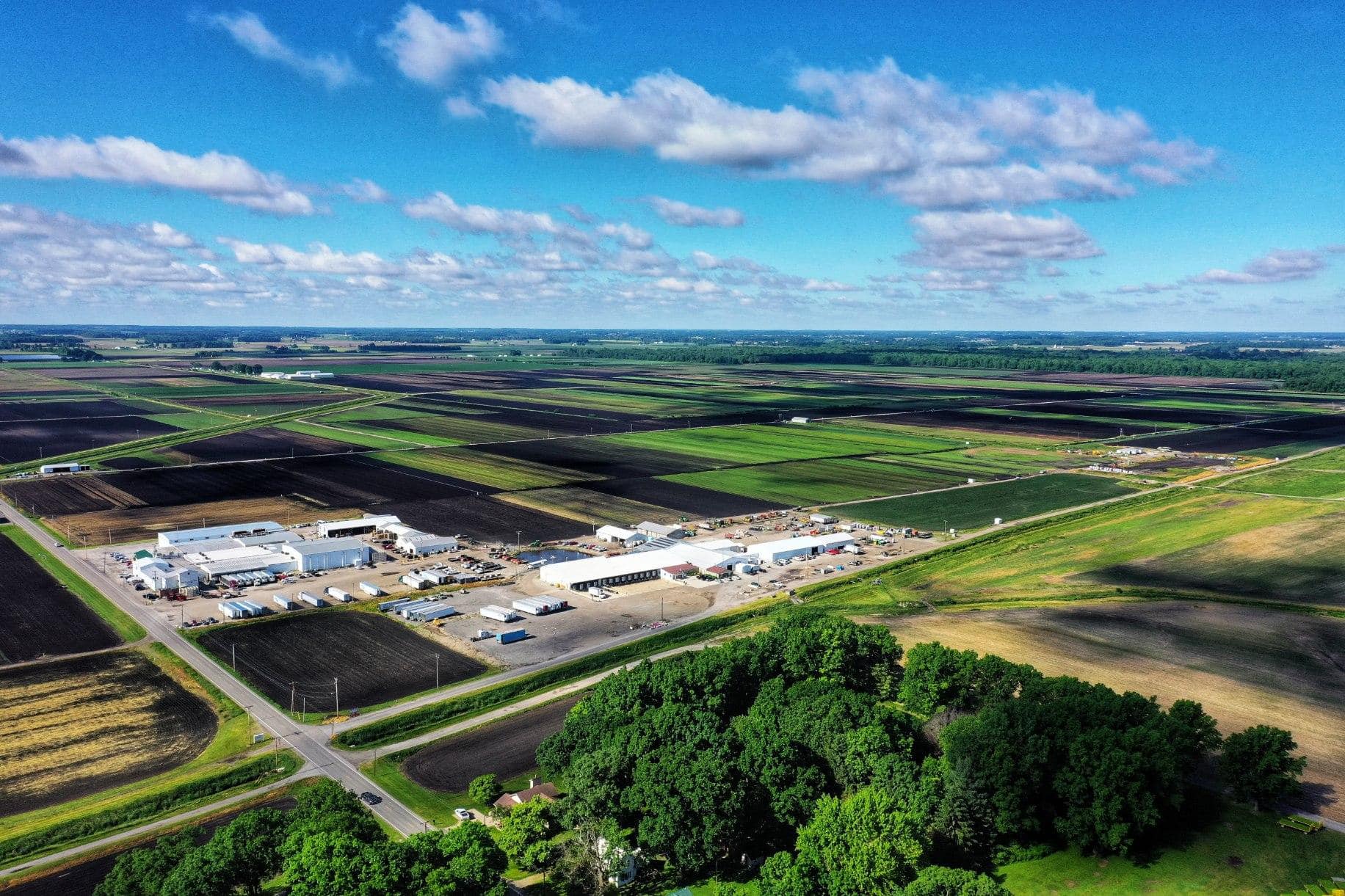
For over 120 years, Holthouse Farms has made its home in Celeryville, Ohio.
Staying in business that long requires more than hard work; it requires partners who can grow and adapt with you.
For decades, one of those partners has been Civista Bank.
Draining the Swamp, Raising a Family, Building a Farm
The Holthouse story begins with a group of 26 Dutch families who settled the Celeryville area between 1896 and 1903. The land at the time was essentially a 3,000-acre swamp that needed draining.
“Being Dutch, our family knew how to drain flooded land,” Ken explains. “They dug ditches, each farmer had three to twenty acres, and they were farmers by day and truck drivers by night. Everybody had their own store routes.”
Ken’s grandfather and great-uncle were among those early growers. Over time, his dad, uncle, and their wives joined. The kids weren’t far behind.
“We were expected to start work around nine or ten years old,” Ken remembers. “We worked with Grandpa in the greenhouse, screening dirt by hand and transplanting celery plants after school and on Saturdays. That was our first paying job.”
By his teens, Ken was driving tractors, spraying, cultivating, and eventually scouting fields. The work was hard, but the lessons were clear.
“Getting the job done in the time frame expected, that was non-negotiable,” he says. “And my dad would always say, ‘Just because your last name is Holthouse doesn’t mean anything except you’re expected to do more than other people.’”
Ken remembers coming home from college one Thanksgiving and being told to grab his overalls and boots. There was a tiny order of celery cabbage that needed to be harvested in the snow.
“Dad and I were on our knees cutting cabbage,” he says. “He never expected anybody to do more than he was willing to do himself. That sticks with you.”
Increased Pressure on Farming
By the late 1980s and early 1990s, that old model of vegetable farming was under pressure. Margins were thin. Interest rates were high. Gas was being rationed. Cash flow was erratic.
“We were still paying double-digit interest rates,” Ken says. “We looked at the last ten years of cash flow. In the two years we thought were our best years, we had just barely covered depreciation.”
The news was sobering. Ken, raising a young family, made the difficult choice to leave the farm and take a job at a printing company in nearby Willard.
“I needed something steady,” he says. “I didn’t think the farm was going to make it.”
But back at home, his younger cousin Kirk was starting to develop new opportunities, working with Walmart as they got into produce, partnering with other growers, and gradually building out a more sophisticated packing and marketing operation.
At the same time, the family began shifting away from “wet veg” like radishes and lettuces into more durable crops, like peppers, cucumbers, squash, and gourds, where packing and logistics could add value.
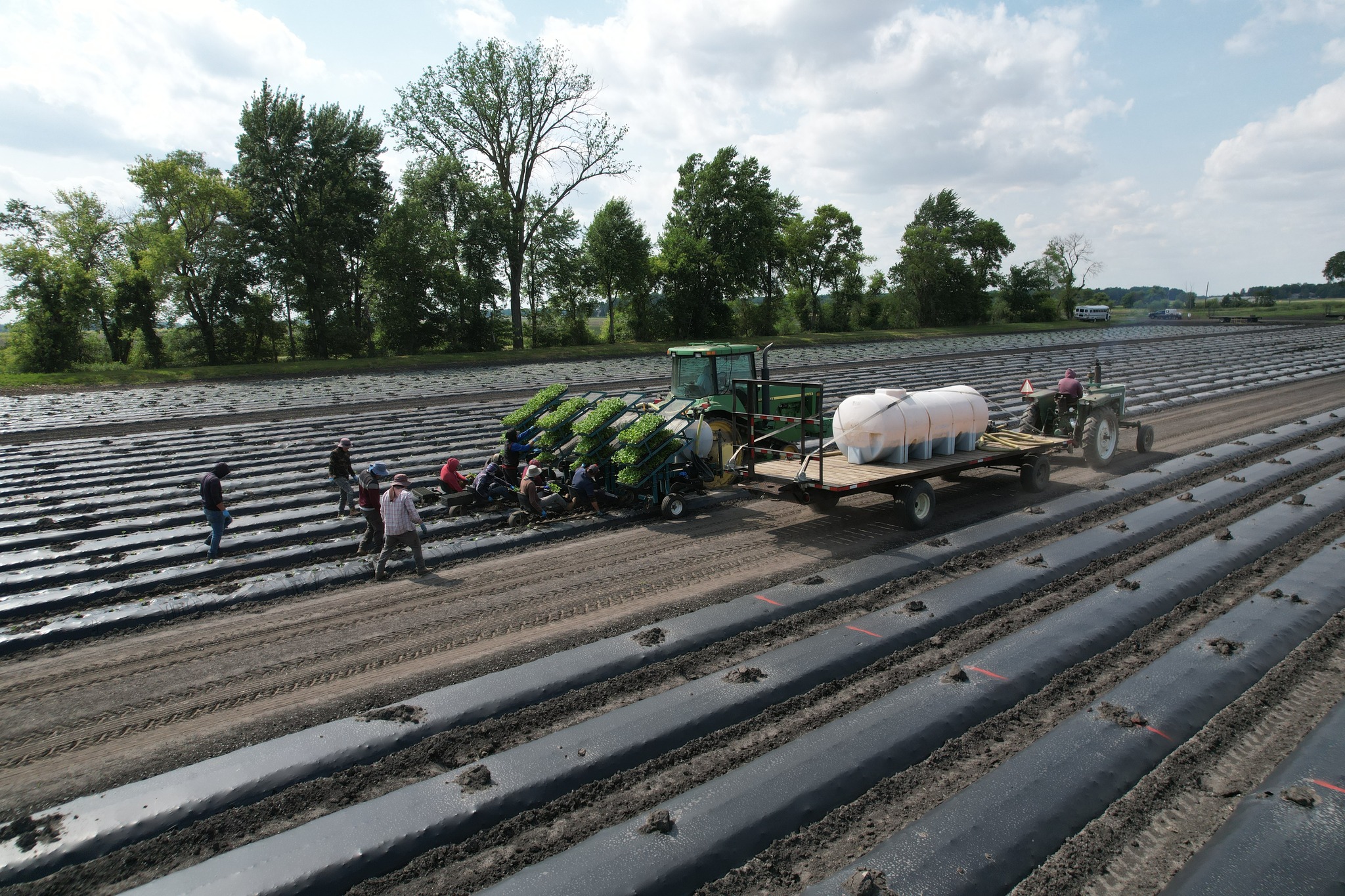
The crew walks behind a planter carrying juvenile pepper plants to be transplanted.
That thinking set the stage for one of the most important moves in Holthouse history: acquiring a neighboring operation called DRW Packing.
The business had built up a strong trade in bell peppers, cucumbers, summer squash, eggplant, and fall ornamentals like gourds and mini-pumpkins.
Ken remembers getting the call from his brother and cousins. They wanted to expand and preferred to have a family member at the helm of the division once acquired; they wanted to know if he’d consider coming back.
To prepare for this big purchase, the family conducted a full review of the DRW business. It had about $3.5 million in top-line revenue and solid gross margins. They turned to long-time partner Civista Bank.
Civista, headquartered in Sandusky, Ohio, serves communities across Ohio, Southeastern Indiana, and Northern Kentucky, and has long supported commercial growth in the region.
“Once Civista saw the current and projected cash flow, they lent us the money to buy the business,” Ken says.
At the time, Missy McDougal, now a VP/Commercial Lender at Civista, had just begun working with the Holthouse family, even though the family had been banking with Civista long before she arrived.
“When I started working with them in the early 2000s, they were struggling and had to rethink their business model and how they were doing things,” she says. “Civista was there to help them with that transition.”
In 2003, Ken left the printing company and came back full-time to run DRW. He’s the kind of person whose presence puts you at ease—a kind face framed by glasses, a well-worn baseball cap, and a comfortable, down-to-earth way of talking that reflects a lifetime of experience.“When I left the farm before, I was just a farmer,” he says, noting the added layers of worry and complexity that came with the new role. “When I came back, I was supposed to run a packing and marketing business.”
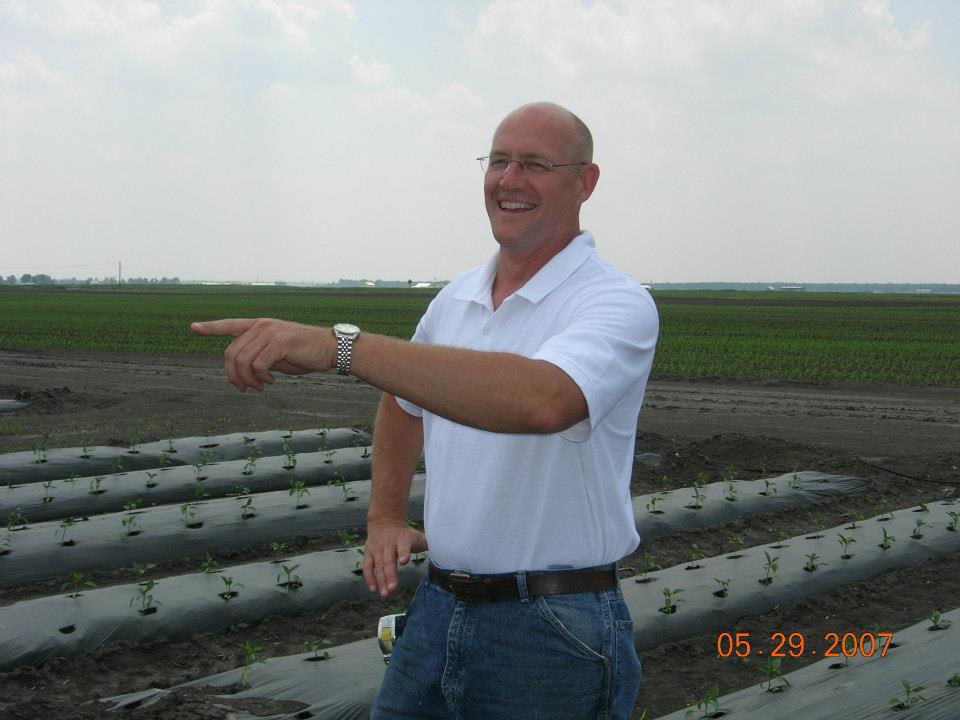
Ken in 2007, touring one of Holthouse Farm’s pepper fields.
The experience he had acquired in the printing industry would prove helpful, creating a foundation for designing process flows and moving product efficiently. With the new operations underway, the future for Holthouse Farms looked promising, but little did anyone know how fast that could all change.
Hard Lessons
By the mid-2000s, the family’s shift toward packing and marketing was starting to pay off. DRW was growing, new grower partnerships were forming, and the business had direction.
Then came the first fire.
In 2007, a lightning strike hit a Holthouse box barn, causing major damage.
“It was about a million-dollar loss, and we only had half a million dollars in insurance coverage,” Ken recalls. Over the years, his dad and uncle had quietly trimmed insurance to save on premiums. Nobody realized how exposed they were until the fire.
“That made us go back and look at everything,” he says. “We discovered the DRW coverage had been set up the same way in 2003. So we changed it. Looking back, if that 2007 fire hadn’t happened, we never would’ve been able to rebuild after what came next.”
What came next was far worse.
On November 2, 2010, Ken had just sat down for lunch in Willard when his phone rang. There was a fire at DRW.
“I told them: Grab a hose and put it out,” he says. “They said, You don’t understand.”
He jumped in his truck and headed toward the plant.
“I got just past the Pepperidge Farm building and looked up,” he says, recalling billows of thick, black smoke. “Fourteen miles away, it looked like a volcano going up into the sky. That was our farm.”
Later he learned it had been a seven-alarm fire. The wind was strong, humidity low, and fuel abundant: a 100-year-old native timber building full of cardboard and produce.
“We drained everybody’s local ponds within a mile,” he says. “There was just nothing they could do.”
The DRW packing facility was a total loss.
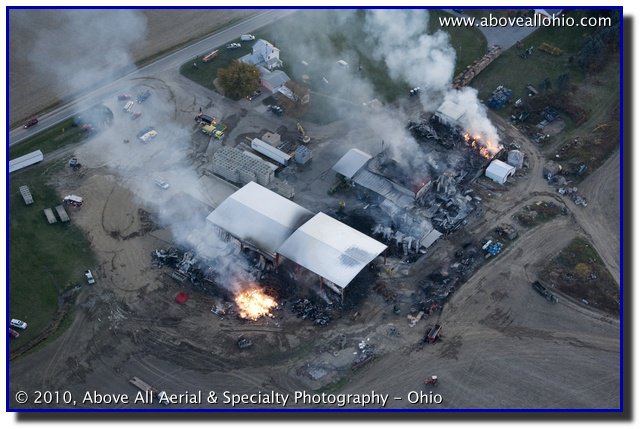
Aftermath of the fire that ravaged the DRW packing facility.
“Missy came down the next day,” Ken says. “We sat down in the office and she said, Okay—how do we get through this? She was incredible through the whole process.”
Missy and her team at Civista Bank got to work, helping the family analyze the financial impact, evaluate the insurance coverage, and structure the financing needed to rebuild.
Rebuilding for the Future
In the aftermath, the family had a choice: walk away, or build something new.
“You don’t often get an opportunity to completely rethink how a plant should work,” Ken says. “Replacing what we lost wasn’t going to set us up for success in the next 20 years.”
While the insurance claim moved forward, the Holthouses leaned on past experience and key partners. Ken drew on his process-flow work from the printing industry. His brother Mike, who had been a construction liaison on large manufacturing plants, used his CAD skills to help design the new layout.
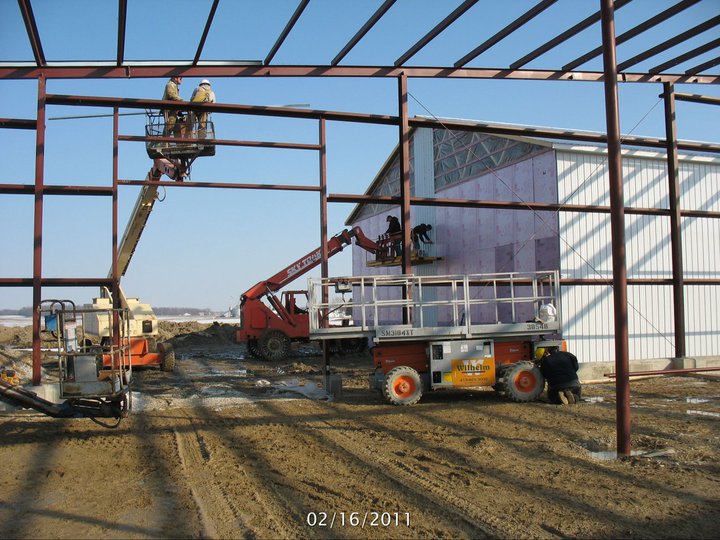
Crews work on rebuilding the DRW facility.
The new facility was designed with clear product flow: raw product in at one end, finished product and shipping at the other, with people and forklifts separated as much as possible. They also invested in a unique, water-based system to move plant waste out of the building efficiently—which they affectionately refer to as the “trash river.”
It was a significant capital project. Insurance covered what was lost; additional improvements required more financing.
“We needed extra money to build the plant the right way,” Ken says. “Civista helped us do that. Between what we’d learned from the 2007 fire and the coverage changes we’d made, we were able to rebuild into the most food-safety-capable packing shed in Ohio.”
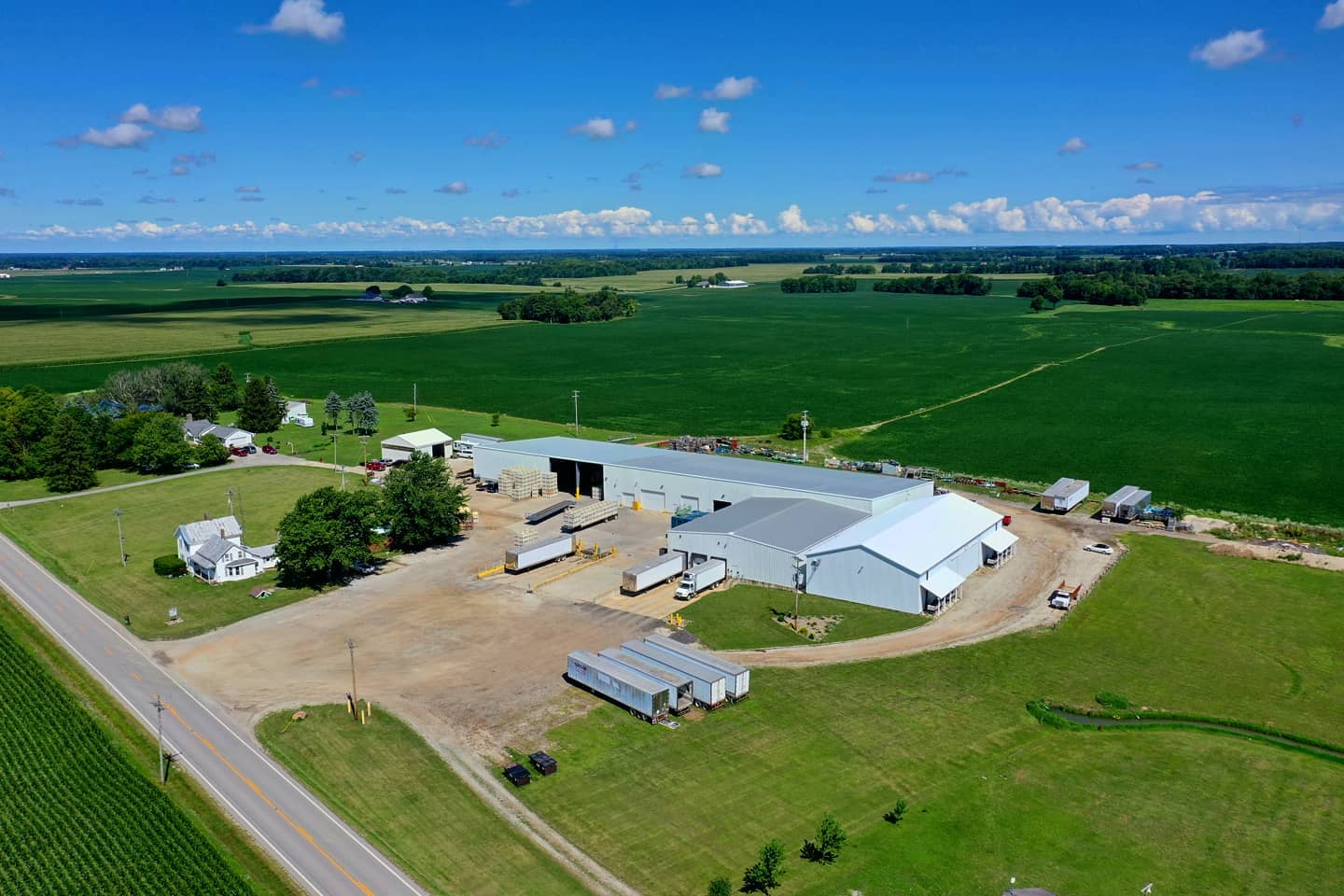
After being rebuilt, the DRW facility houses state-of-the-art food packing systems and technology.
Missy says it plainly: “We’ve helped them put on major additions, finance equipment and land, even solar panels to lower their energy costs. We’ve really been there every step of the way.”
Financial Services to Support Operations
Today, Holthouse Farms is more than a family farm. It’s a network of connected businesses:
- Holthouse Farms, with its own farmland and a local fresh-produce outlet.
- DRW Packing, the core packing and marketing operation that handles product from their own fields and from dozens of outside growers across multiple states.
- Life Brand Logistics and Life Brand Transport, hauling product to retailers and foodservice customers.
Behind the scenes, that means a lot of moving financial parts: multiple business entities, dozens of accounts, payroll for year-round staff and seasonal labor, check-cashing for migrant workers, payments to growers, and incoming payments from retailers and distributors.
“In Treasury, I always say my job is making the money move,” says Jen Lowe, VP/Treasury Management Officer at Civista. With an increasingly complex ecosystem, Jen stepped in to help with operational efficiencies. “Our job was to help simplify things for the Holthouse team.”
Civista set them up with ACH origination, which ensures secure electronic money transfers for things like payroll and vendor payments, so the operation can conveniently and seamlessly move money. Of course, as operations grow, fraud becomes another key concern, making Civista’s Positive Pay especially important. The check-fraud prevention service compares checks presented for payment against a list of checks the company has actually issued, helping catch altered or counterfeit items.
Positive Pay became especially critical after check fraud hit the local area.
Many local vendors offered to cash workers’ checks to encourage them to shop at their stores. Bad actors started to take advantage of that. “There were groups driving around in vans offering to ‘cash’ checks for our workers, then copying them and making more. Grocery stores would take those checks and get stuck when they didn’t clear,” Ken explains.
Implementing Positive Pay helped protect Holthouse Farms, local merchants, and the bank.
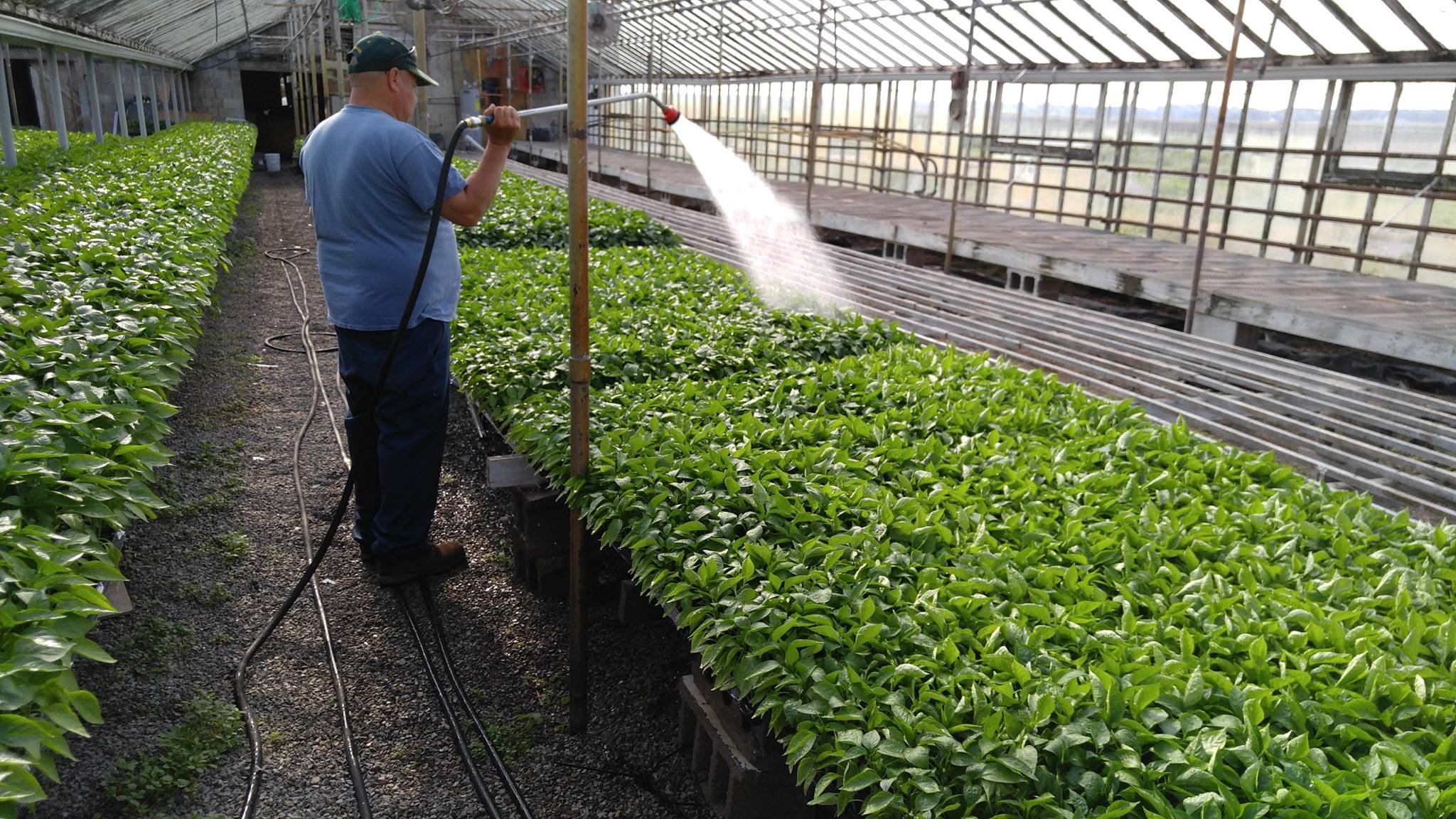
An employee waters crops in one of the greenhouses.
On the consumer side, Civista supports both the family and their employees. Branch staff in Willard know the routine for paydays, when buses and vans of workers arrive to cash checks or deposit money.
“It’s like clockwork,” says Branch Manager Brian Evak. “They know to bring their ID, we know how to move them through quickly. A lot of them have accounts with us now. It’s a smooth process.”
A Relationship Built on Trust
Over the decades, the Holthouse family has had no shortage of suitors from larger banks offering aggressive rates or chasing investment business.
“Money’s money,” Ken says. “We’ll tell Missy, This other bank is knocking on our door with better rates. Can you match it? She’ll run it up the flagpole and come back with what Civista can do. They’re honest about it. They don’t just tell us what we want to hear.”
For Jessica Steuk at Civista, who works with Ken on the private banking and wealth side, the relationship has always felt personal.
“Ken knows that he can text or call me, even after hours or on the weekends, if he needs something,” she says. “Because of this Ken sees us as part of his personal and commercial financial team. You don’t get that with a big regional bank.”
Over the years, Civista has helped with a range of financing and personal wealth management needs. Everything from retirement planning, 401(k) services for Holthouse employees, suggesting estate planning resources, and handling quick, complex transfers—like the time the family moved funds to help the local Christian school meet payroll on short notice.
“That school is our local mission field,” Ken says. “All four of us are alumni. Civista moved heaven and earth to make sure the money got where it needed to go in time.”
Looking Ahead: Succession, Community, & the Next Generation
Today, Ken and his family are thinking hard about what comes next. They are evaluating options for succession planning, and equipping the next generation of Holthouses to continue the legacy in some form.
What he knows for sure is that the business will stay rooted in the same founding principles.
Work hard. Treat people fairly. Protect your growers. Build everything on trust.
“When things were at their worst,” Ken says, thinking back to that November day when he saw the smoke rising from the DRW fire, “Civista was standing right there beside us.”
For other businesses in towns like Celeryville and Willard, that’s the picture he hopes they see: a family farm that’s still here, still growing, not because the road has been easy, but because they had the right people—and the right bank—walking it with them.
Civista Bank is proud to stand beside businesses like Holthouse Farms, companies rooted in their communities and committed to doing things the right way. Whether you’re planning for growth, strengthening your cash flow, or simply looking for a banking partner who knows you and your business by name, the Civista team is here to help you take the next step with confidence.

